


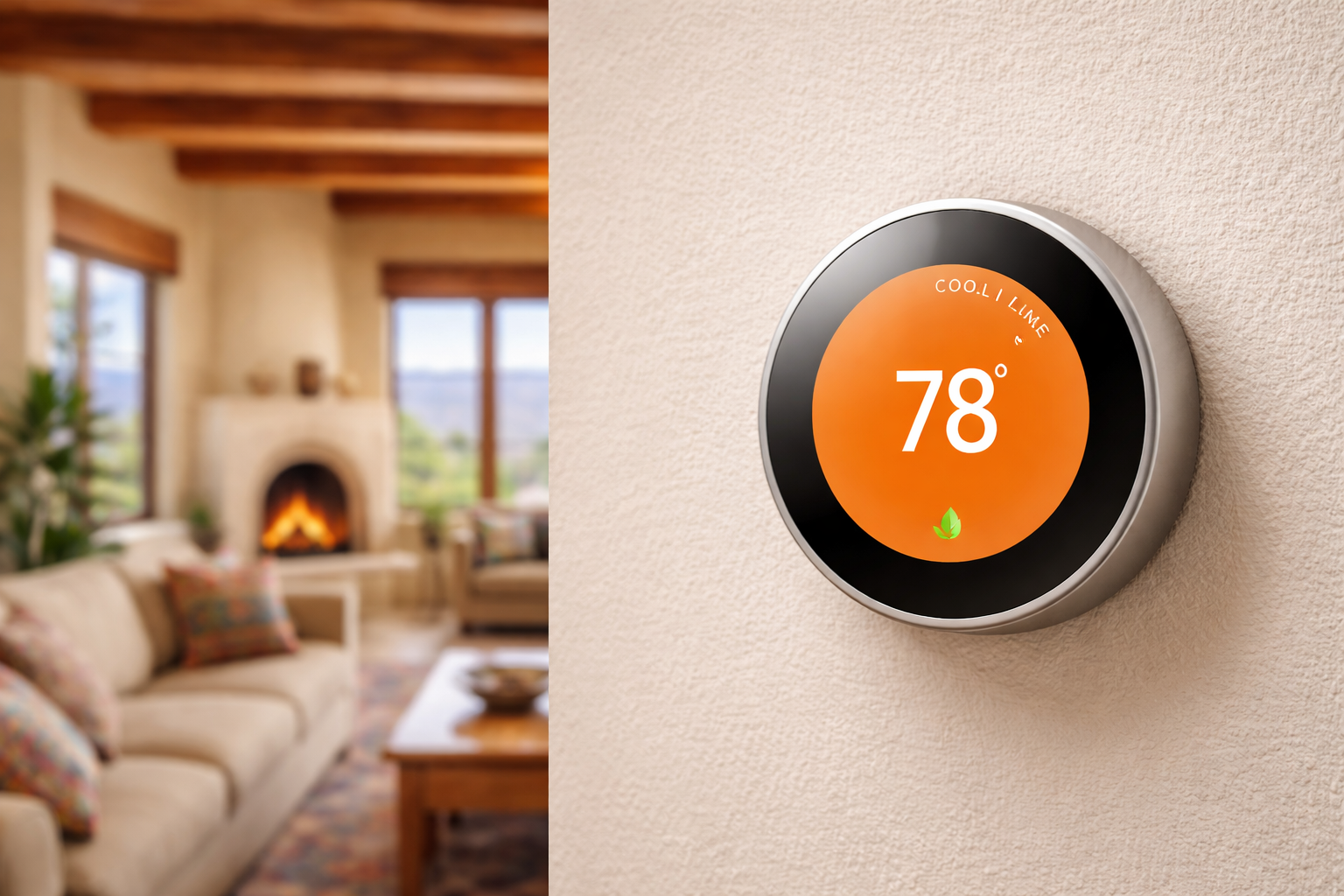
What’s the Ideal Thermostat Setting for Santa Fe Homes?
If you live in Santa Fe, you already know the climate here is unique. We experience hot, dry summers… chilly winters… and dramatic temperature swings between day and night. Because of that, one of the most common questions homeowners ask is:
What’s the best thermostat setting in Santa Fe?
The answer depends on the season, your home’s insulation, your HVAC system, and your comfort preferences — but there are proven guidelines that can help you stay comfortable while saving money.
In this guide, we’ll break down:
-
The best thermostat setting for Santa Fe summers
-
The ideal winter thermostat setting
-
How desert climate affects HVAC performance
-
How to maximize smart thermostat savings
-
When to upgrade to a more energy-efficient HVAC setup
-
And how Salazar Heating, Cooling & Plumbing can help
Let’s get started.
Why Thermostat Settings Matter More in Santa Fe
Santa Fe sits at over 7,000 feet elevation. That high-desert environment creates:
-
Strong sun exposure
-
Low humidity
-
Big temperature swings
-
Rapid heat gain during the day
-
Quick cooling at night
Because of this, your HVAC system often works harder than you think. Choosing the best thermostat setting in Santa Fe isn’t just about comfort — it’s about reducing strain on your system and lowering your utility bills.
Even a 2–3 degree adjustment can reduce energy use by 5–10%.
Best Thermostat Setting in Santa Fe During Summer
Summers in Santa Fe regularly reach the high 80s and 90s. The sun intensity makes indoor temperatures rise quickly — especially in adobe-style or older homes.
Recommended Summer Thermostat Settings:
-
78°F when you are home
-
82–85°F when you are away
-
Use ceiling fans to increase comfort
Why 78°F?
The U.S. Department of Energy recommends 78°F as the ideal balance between comfort and energy efficiency. At this setting:
-
Your AC runs efficiently
-
You reduce energy consumption
-
You avoid overworking your system
-
You lower monthly cooling costs
In Santa Fe’s dry climate, 78°F feels cooler than it would in humid regions.
Slightly Lower Efficiency for Greater Summer Comfort
While 78°F is often recommended as the most energy-efficient summer setting, some Santa Fe homeowners find that setting the thermostat a bit lower—around 74–76°F—provides noticeably better comfort during peak afternoon heat. In our high-desert climate, direct sun exposure and large windows can cause indoor temperatures to feel warmer than the thermostat reading. Lowering the setting a few degrees helps offset radiant heat and keeps bedrooms cooler at night. Just keep in mind that every degree you drop the thermostat can increase cooling costs by about 3–5%, so balancing comfort and efficiency is key.
How to Feel Cooler Without Lowering the Thermostat
If 78°F feels slightly warm at first, try these tricks:
-
Run ceiling fans counterclockwise
-
Close blinds during peak sun hours
-
Use blackout curtains on south-facing windows
-
Cook outdoors when possible
-
Limit oven and dryer use during the day
These small changes improve comfort without lowering your thermostat.
Best Thermostat Setting in Santa Fe During Winter
Santa Fe winters can dip into the 20s and 30s overnight. Heating costs can rise quickly if your thermostat is set too high.
Recommended Winter Thermostat Settings:
-
68°F when you are home
-
60–62°F while sleeping
-
55–60°F when away
Lowering your thermostat by 7–10 degrees for 8 hours a day can save up to 10% annually on heating costs.
Because the air is dry in winter, 68°F often feels comfortable, especially with warm clothing and proper insulation.
Slightly Higher Efficiency Trade-Off for Winter Comfort
In winter, 68°F is typically considered an energy-efficient setting, but many homeowners in Santa Fe prefer 70–72°F for a cozier indoor feel—especially in adobe or tile-floored homes that can feel cooler underfoot. Raising the thermostat a couple of degrees reduces that chilly sensation during early mornings and evenings when temperatures drop quickly outside. However, increasing the heat even slightly can raise your energy usage, so pairing a slightly warmer setting with proper insulation and sealed windows can help maintain comfort without dramatically increasing your heating bill.
Smart Thermostat Savings in Santa Fe
If you want to truly optimize the best thermostat setting in Santa Fe, a smart thermostat is one of the best investments you can make.
Smart thermostats:
-
Learn your schedule
-
Adjust automatically
-
Optimize energy use
-
Provide energy reports
-
Allow remote control
-
Offer smart thermostat savings year-round
Studies show homeowners save $100–$150 per year using smart thermostats correctly.
In Santa Fe’s fluctuating climate, automated adjustments make a big difference.
Why Desert Climate Changes the Equation
Unlike humid climates, Santa Fe’s dry air allows for:
-
Faster cooling at night
-
Less humidity strain on AC systems
-
More effective evaporative cooling
-
Better performance from ceiling fans
Because of these factors, you often don’t need to cool as aggressively as homeowners in humid states.
Understanding your climate helps you choose the ideal thermostat setting for Santa Fe homes without overspending.
How Temperature Swings Affect Your HVAC System
Santa Fe is known for dramatic day-to-night changes. It may be 85°F in the afternoon and 55°F by evening.
If your thermostat isn’t programmed correctly:
-
Your AC runs too long in the afternoon
-
Your furnace kicks on unnecessarily at night
-
Your system short cycles
-
Your energy bills spike
Using programmable or smart scheduling prevents unnecessary heating and cooling cycles.
Best Thermostat Strategy for Multi-Level Homes
Many Santa Fe homes have:
-
Split levels
-
Adobe construction
-
Uneven airflow
-
Hot upper floors
For these homes:
-
Use zoning systems if available
-
Install smart thermostats with room sensors
-
Keep vents balanced
-
Schedule HVAC tune-ups annually
If you constantly struggle with uneven temperatures, it may be time to evaluate your HVAC system efficiency.
Should You Set It and Forget It?
Many homeowners believe keeping the thermostat at one constant temperature is best.
That’s not true.
Adjusting temperature while you’re away saves energy and reduces wear on your system.
Modern energy-efficient HVAC systems are designed to handle programmed adjustments.
How Old HVAC Systems Impact Thermostat Efficiency
If your system is 12–15 years old, even the best thermostat setting in Santa Fe won’t fix inefficiency.
Signs your HVAC system may be outdated:
-
Rising utility bills
-
Frequent repairs
-
Uneven cooling
-
Loud operation
-
Short cycling
Upgrading to an energy-efficient HVAC system combined with smart thermostat installation in Santa Fe can dramatically reduce energy costs.
Ideal Thermostat Setting for Santa Fe Rental Properties
Landlords and property managers should:
-
Set summer cooling at 78–80°F
-
Install programmable thermostats
-
Educate tenants on energy-efficient use
-
Schedule seasonal HVAC maintenance
This protects equipment and keeps costs manageable.
Energy-Efficient HVAC Tips for Santa Fe Homes
To maximize thermostat efficiency:
-
Replace air filters every 1–2 months
-
Seal air leaks around doors/windows
-
Insulate attic properly
-
Schedule AC tune-ups before summer
-
Schedule furnace inspections before winter
-
Clean outdoor condenser units
-
Install smart thermostats
All of these improve HVAC performance and reduce operating costs.
Common Thermostat Mistakes Santa Fe Homeowners Make
-
Setting thermostat too low in summer
-
Turning AC down drastically to cool faster (doesn’t work)
-
Ignoring night temperature drops
-
Not using programmable features
-
Leaving system running while on vacation
-
Never recalibrating thermostat
Correcting these habits alone can lower your monthly bills.
How Much Can You Actually Save?
Adjusting thermostat settings properly can save:
-
5–15% on cooling costs
-
10% on heating costs
-
Hundreds annually in combined savings
Over 10 years, that’s thousands in reduced energy expenses.
When to Consider Smart Thermostat Installation in Santa Fe
You should consider upgrading if:
-
Your thermostat is over 10 years old
-
You manually adjust temperature daily
-
You travel often
-
You want smart thermostat savings
-
You want better HVAC efficiency
-
You want energy usage reports
Smart thermostat installation in Santa Fe is affordable and often qualifies for rebates.
Why Professional Installation Matters
While some thermostats are DIY-friendly, professional installation ensures:
-
Proper wiring
-
Compatibility with your HVAC system
-
Calibration accuracy
-
System integration
-
No electrical risk
Improper installation can damage your HVAC system.
The Bottom Line: What’s the Best Thermostat Setting in Santa Fe?
Here’s the simple answer:
Summer:
78°F home | 82–85°F away
Winter:
68°F home | 60°F sleeping | 55–60°F away
Combine that with:
-
Smart scheduling
-
Proper insulation
-
Regular maintenance
-
Energy-efficient HVAC systems
And you’ll maximize comfort while minimizing costs.
Call Salazar Heating, Cooling & Plumbing Today
If you’re unsure whether your thermostat is set correctly…
If your HVAC system isn’t performing efficiently…
Or if you’re ready to upgrade to smart thermostat installation in Santa Fe…
Salazar Heating, Cooling & Plumbing is here to help.
We provide:
-
HVAC system evaluations
-
Smart thermostat installation
-
Seasonal tune-ups
-
Energy-efficiency upgrades
-
Full heating and cooling services
📞 Call (505) 820-2007 today to schedule your HVAC service.
Serving Santa Fe, Albuquerque, and surrounding New Mexico communities with honest, expert service.
Stay comfortable. Save money. And let your HVAC system work smarter—not harder.