


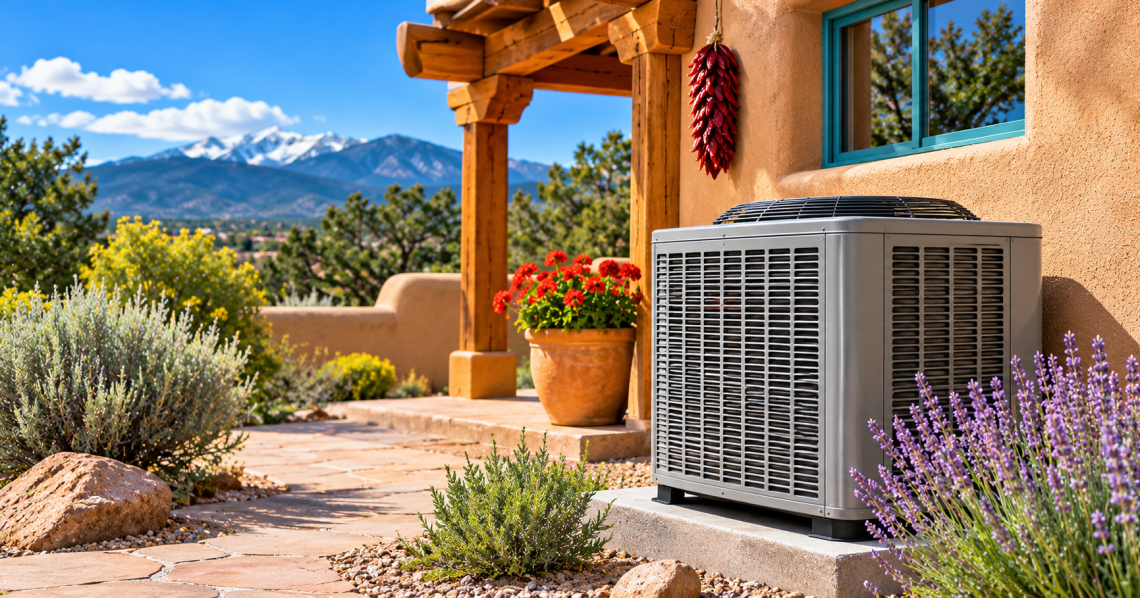
Regular HVAC maintenance can help Santa Fe homeowners save money by reducing wasted energy, preventing avoidable breakdowns, extending equipment life, and catching small problems before they become expensive repairs. Scheduling an HVAC tune-up in Santa Fe before the heating and cooling seasons is one of the simplest ways to protect your home’s comfort and your investment in its heating and cooling equipment.
Living in Santa Fe means your HVAC system has to handle a little bit of everything. Summer afternoons can get hot, winter nights regularly fall below freezing, and temperatures can change quite a bit between morning and evening.
Add in our dry climate, seasonal dust, and high-desert conditions, and it’s easy to understand why heating and cooling equipment needs regular attention.
Unfortunately, many homeowners don’t think about their HVAC system until something stops working.
Maybe the air conditioner struggles to cool the house in July. Maybe the furnace starts making strange noises in December. Or maybe the electric bill keeps climbing even though your thermostat settings haven’t changed.
Regular maintenance can help you avoid many of these situations.
Let’s look at how professional HVAC maintenance saves money, what should be included in a seasonal tune-up, and how often Santa Fe homeowners should schedule service.
1. An HVAC Tune-Up in Santa Fe Can Lower Energy Bills
One of the biggest financial benefits of routine HVAC maintenance is improved energy efficiency.
Your heating and cooling system uses energy to keep your home at a comfortable temperature. When components become dirty, worn, or improperly adjusted, the equipment may need to work harder to deliver the same results.
For example, a clogged air filter can restrict airflow through your system. Dirty coils can reduce heat transfer. A blower that isn’t operating properly can make it difficult to distribute conditioned air throughout your home.
These problems can increase energy consumption and reduce comfort.
How Maintenance Improves HVAC Efficiency
During a professional HVAC tune-up, a technician can inspect and service components that affect system performance.
Depending on the equipment, this may include:
- Cleaning or inspecting evaporator and condenser coils
- Checking airflow and blower operation
- Inspecting electrical connections
- Evaluating refrigerant system performance
- Checking thermostat operation
- Inspecting condensate drainage
- Testing heating and cooling performance
- Identifying worn or damaged components
When your system operates as designed, it has a better chance of delivering comfortable temperatures without unnecessary energy waste.
How Much Can HVAC Maintenance Save on Electricity?
There isn’t one savings percentage that applies to every home.
A neglected system with severely restricted airflow may experience a noticeable improvement after maintenance. A relatively new system that’s already clean and operating correctly may show a much smaller change.
Your savings depend on the condition of the equipment, how often it runs, local utility rates, and whether maintenance corrects an existing efficiency problem.
The important point is that preventative HVAC maintenance helps protect the efficiency you’ve already paid for.
An expensive, high-efficiency air conditioner won’t deliver its intended performance if it isn’t properly maintained.
2. Preventative HVAC Maintenance Helps Avoid Expensive Repairs
Nobody wants their air conditioner to stop working during a hot Santa Fe afternoon or their furnace to fail during a freezing winter night.
Unfortunately, small mechanical problems can develop gradually without producing obvious symptoms.
A loose electrical connection might cause intermittent operation. A failing capacitor can eventually prevent a cooling system from starting. A clogged condensate drain can lead to water damage in certain installations.
Regular inspections provide an opportunity to identify these issues before they become more serious.
Small HVAC Problems Can Become Bigger Problems
Consider a cooling system with a dirty outdoor condenser coil.
At first, you might not notice anything unusual. The system still cools your house, although it may be working harder than necessary.
Over time, restricted heat transfer can contribute to elevated operating temperatures and additional stress on components.
If the condition goes unaddressed, the system may eventually experience performance problems or a breakdown.
Cleaning and inspecting the equipment during a scheduled maintenance visit can help reduce that risk.
Of course, maintenance cannot prevent every mechanical failure. Parts can wear out unexpectedly even when equipment is properly serviced.
However, catching problems early can sometimes prevent a relatively simple repair from turning into a much more expensive one.
3. Regular AC and Furnace Maintenance Can Extend Equipment Life
Replacing a furnace, air conditioner, or heat pump is a significant household expense.
Depending on the equipment, installation requirements, and home layout, replacing an entire heating or cooling system can cost thousands of dollars.
Naturally, most homeowners want their existing equipment to last as long as reasonably possible.
Routine maintenance can help.
Why HVAC Equipment Wears Out
Heating and cooling systems contain components that experience regular mechanical, electrical, and thermal stress.
Motors run, compressors cycle, electrical components heat up, and equipment expands and contracts as temperatures change.
Normal wear is unavoidable.
However, neglected maintenance can create additional strain.
For example:
- Restricted airflow can make heating and cooling less effective.
- Dirty coils can interfere with heat transfer.
- Loose electrical connections can create operational problems.
- Improper refrigerant conditions can affect cooling performance.
- Neglected drainage systems can contribute to water-related problems.
Correcting these conditions helps equipment operate closer to its intended design.
How Long Should an HVAC System Last?
Actual service life varies by equipment type, installation quality, maintenance history, climate, and usage.
Many central air conditioners and heat pumps operate for roughly 10 to 15 years or longer, while furnaces may last approximately 15 to 20 years or more under suitable conditions.
These are general planning ranges, not guaranteed replacement schedules.
A well-maintained system can still fail early, and an older system may continue operating reliably beyond the typical range.
The financial benefit of maintenance comes from reducing avoidable wear and helping homeowners make informed repair or replacement decisions.
4. Seasonal HVAC Maintenance Is Especially Important in Santa Fe
Santa Fe’s high-desert climate creates distinct heating and cooling demands throughout the year.
A system that performs well in spring may encounter different operating conditions during summer or winter.
That’s why seasonal maintenance is so valuable.
Spring: Prepare Your Air Conditioner for Summer
Spring is an ideal time to schedule an AC tune-up in Santa Fe.
Before the hottest weather arrives, a technician can inspect the cooling system and address problems that may have developed during the previous season.
Typical spring AC maintenance includes checking the outdoor condenser, inspecting electrical components, evaluating airflow, and confirming proper cooling operation.
This is also a good time to clean or replace your air filter and make sure outdoor equipment has adequate clearance.
Scheduling maintenance before summer can help reduce the likelihood of discovering a problem during the first major heat wave.
Summer: Keep Your Cooling System Running Efficiently
During summer, your air conditioner or mini split may operate for extended periods.
Santa Fe’s dry climate and seasonal dust can make regular filter inspection especially important.
Homeowners should also keep leaves, dirt, and landscaping away from outdoor equipment.
If your air conditioner suddenly begins running much longer than normal, struggles to maintain temperature, or makes unusual noises, don’t wait until the next scheduled maintenance visit.
Those symptoms may indicate a problem that needs professional attention.
Fall: Schedule Furnace Maintenance Before Winter
Fall is an excellent time for a furnace tune-up in Santa Fe.
A heating inspection helps confirm that the system is ready for colder temperatures.
For gas furnaces, professional service may include inspecting burners, checking ignition components, examining the venting system, testing safety controls, and evaluating combustion-related conditions.
A technician may also inspect the heat exchanger according to the manufacturer’s recommended procedures.
These checks are particularly important because furnace maintenance involves more than energy efficiency.
Proper operation also matters for household safety.
Winter: Monitor Heating Performance
During winter, pay attention to changes in how your heating system operates.
Warning signs can include:
- Uneven temperatures between rooms
- Unusual noises
- Frequent cycling
- Difficulty reaching the thermostat setting
- Unexpected increases in heating costs
- Weak airflow
- Repeated system shutdowns
If you notice these problems, schedule service rather than assuming they’re normal.
For gas heating equipment, a working carbon monoxide alarm is also an important household safety measure. Follow manufacturer instructions for alarm placement and testing.
5. Your Seasonal HVAC Maintenance Checklist
Not every maintenance task requires a professional.
There are several simple things homeowners can do throughout the year to help protect their heating and cooling systems.
However, electrical work, refrigerant service, combustion testing, and internal mechanical repairs should be handled by qualified professionals.
Seasonal HVAC Checklist for Santa Fe Homeowners
| Maintenance task | Recommended timing | Why it matters |
|---|---|---|
| Inspect air filters | Monthly | Helps maintain proper airflow |
| Clean or replace filters | As needed, per manufacturer | Reduces airflow restrictions |
| Check thermostat settings | Seasonally | Helps avoid unnecessary energy use |
| Clear debris around outdoor equipment | Regularly | Supports proper airflow |
| Inspect visible vents and registers | Every few months | Helps identify blocked airflow |
| Schedule professional AC service | Spring | Prepares cooling equipment for summer |
| Schedule professional furnace service | Fall | Prepares heating equipment for winter |
| Check condensate drainage | During cooling maintenance | Helps prevent drainage problems |
| Inspect visible ductwork for damage | Periodically | Helps identify possible air leakage |
| Test carbon monoxide alarms | Per manufacturer instructions | Supports household safety |
For most Santa Fe homes with separate air conditioning and furnace equipment, scheduling professional cooling maintenance in spring and heating maintenance in fall is a practical approach.
Homes with heat pumps or ductless mini splits should follow the manufacturer’s service recommendations, taking into account that the equipment may operate throughout the year.
6. HVAC Maintenance Can Improve Comfort Throughout Your Home
Saving money is important, but comfort matters too.
An HVAC system that isn’t operating correctly may create hot and cold spots, weak airflow, or inconsistent indoor temperatures.
You might notice that one bedroom stays warmer than the rest of the house or that your living room never feels quite comfortable.
Sometimes these issues are related to the building itself, such as poor insulation, air leakage, or uneven sun exposure.
Other times, HVAC performance contributes to the problem.
How Maintenance Helps With Uneven Temperatures
During a tune-up, a technician may identify issues such as:
- Dirty filters restricting airflow
- Blower performance problems
- Blocked or improperly adjusted registers
- Thermostat issues
- Equipment operating outside expected conditions
Addressing these problems can help improve temperature consistency.
For Santa Fe homes with additions, casitas, or rooms that are difficult to condition, a ductless mini split may also be worth considering.
These systems provide individual temperature control and can be particularly useful where extending conventional ductwork isn’t practical.
7. Regular HVAC Service Can Help Improve Indoor Air Quality
Santa Fe homeowners deal with dust, pollen, and other airborne particles throughout the year.
While your HVAC system isn’t a substitute for proper ventilation and a complete indoor air quality strategy, maintaining its filtration and airflow components can help reduce the recirculation of certain particles.
Why Air Filters Matter
Air filters capture particles as air moves through the heating and cooling system.
Over time, filters collect dust and debris.
If they become excessively dirty, airflow may decrease.
This can affect comfort and equipment performance.
Check your filter regularly and replace or clean it according to the manufacturer’s instructions.
Homes with pets, higher dust levels, or frequent HVAC use may need more frequent filter attention.
Does HVAC Maintenance Remove Allergens?
Maintenance can help keep filtration and airflow systems functioning properly, but it doesn’t eliminate every indoor air contaminant.
The effectiveness of filtration depends on the filter rating, system compatibility, airflow, and other factors.
If indoor air quality is a concern, a professional can help evaluate appropriate filtration and ventilation options.
Avoid installing an extremely restrictive filter without confirming that your HVAC system can accommodate it.
8. Smart Thermostats Can Help Reduce Heating and Cooling Costs
An HVAC tune-up is also a good opportunity to review how your thermostat is being used.
Even an efficient heating and cooling system can consume unnecessary energy if it’s maintaining uncomfortable or excessive temperature settings.
Programmable and smart thermostats can help homeowners manage temperatures based on their schedules.
For example, you may be able to reduce cooling demand while the house is unoccupied or adjust heating settings overnight.
However, the best thermostat strategy depends on your equipment.
Thermostat Settings for Heat Pumps
Some heat pump systems operate most efficiently with relatively consistent temperature settings.
Large winter setbacks can sometimes trigger supplemental electric resistance heating, depending on the system configuration.
That can reduce or eliminate the expected savings.
For this reason, thermostat schedules should be matched to the type of heating equipment installed.
Thermostat Compatibility Matters
Not every smart thermostat works with every HVAC system.
Many ductless mini splits use proprietary controls or require compatible interfaces.
Before purchasing a thermostat, confirm compatibility with your equipment.
A qualified HVAC technician can help you choose settings and controls that support comfort without unnecessary energy consumption.
9. HVAC Maintenance May Help Protect Your Manufacturer’s Warranty
Many homeowners don’t think about warranty requirements until something breaks.
However, HVAC manufacturers may require equipment to be installed, operated, and maintained according to their published instructions.
Some warranties include specific maintenance or documentation conditions.
If a major component fails, maintenance records may help establish that the system received appropriate care.
Keep Your HVAC Service Records
After each professional maintenance visit, save the service invoice or inspection report.
Your records should ideally include:
- Date of service
- Equipment inspected
- Maintenance performed
- Problems identified
- Repairs completed
- Technician or company information
These records can be useful when discussing warranty coverage, evaluating equipment condition, or planning future replacement.
Always review the actual warranty terms for your equipment. Routine maintenance does not guarantee warranty approval, and warranty requirements vary by manufacturer.
10. Is an HVAC Maintenance Plan Worth the Money?
Some HVAC companies offer maintenance plans that include scheduled inspections, service reminders, and other benefits.
Whether a plan is worth purchasing depends on the price and what’s included.
A useful plan should provide meaningful preventative service rather than simply a quick visual inspection.
What Should an HVAC Maintenance Plan Include?
Look for a plan that clearly explains:
- How many service visits are included
- Which heating and cooling systems are covered
- What technicians inspect and clean
- Whether filters or replacement parts are included
- How repair recommendations are handled
- Whether discounts or priority scheduling are offered
- Any exclusions or additional charges
Compare the total annual plan cost with the price of scheduling individual tune-ups.
The goal is to make sure you’re receiving appropriate maintenance at a reasonable cost.
For many homeowners, the convenience of scheduled reminders and consistent service records can also be valuable.
11. When Should You Schedule an HVAC Tune-Up in Santa Fe?
The best time to schedule HVAC maintenance is before you need the system most.
For traditional heating and cooling equipment, a good schedule is:
Spring: Schedule air conditioner maintenance before the summer cooling season.
Fall: Schedule furnace or heating system maintenance before freezing winter temperatures arrive.
For heat pumps that provide both heating and cooling, follow the manufacturer’s recommendations for year-round maintenance.
If your system is older, operates heavily, or has a history of performance problems, a technician may recommend additional inspections.
Can You Schedule Maintenance During Summer or Winter?
Absolutely.
While preseason maintenance is convenient, it’s better to have equipment serviced late than to skip maintenance entirely.
If you haven’t had your system inspected recently, you don’t necessarily need to wait until the next season.
And if your system is making unusual noises, leaking, failing to heat or cool properly, or shutting down unexpectedly, schedule diagnostic service rather than waiting for a routine tune-up.
12. How Much Does an HVAC Tune-Up Cost in Santa Fe?
The cost of an HVAC tune-up depends on the type of equipment, the number of systems being serviced, the work included, and whether additional repairs are needed.
A basic air conditioner inspection may be priced differently from a comprehensive furnace service or a multi-zone mini split maintenance visit.
Some companies offer seasonal specials, while others include routine service through maintenance agreements.
Instead of choosing solely by the lowest advertised price, ask what the service actually includes.
Questions to Ask Before Scheduling Maintenance
Before booking, consider asking:
- What inspections and cleaning tasks are included?
- Is the price for one system or multiple systems?
- Are filters or replacement parts included?
- Will I receive a written summary of the equipment’s condition?
- Are additional repairs quoted separately?
- Does the service follow the manufacturer’s maintenance recommendations?
A thorough tune-up should help you understand the condition of your equipment and identify any issues that deserve attention.
13. How HVAC Maintenance Saves Money Over the Long Term
It’s easy to focus on the immediate cost of a service appointment.
However, the financial value of preventative maintenance becomes clearer when you look at the bigger picture.
Consider two homeowners with similar heating and cooling systems.
The first homeowner schedules regular maintenance, changes filters as needed, and addresses problems when they’re discovered.
The second homeowner rarely checks the equipment and waits until something stops working.
There’s no guarantee that the first homeowner will spend less every year. Even well-maintained equipment can experience unexpected failures.
But regular maintenance provides more opportunities to identify problems early, maintain efficiency, and plan for repairs before they become urgent.
The Four Main Financial Benefits
| Benefit | How maintenance helps |
|---|---|
| Lower energy waste | Keeps equipment closer to its intended operating condition |
| Fewer avoidable repairs | Identifies developing problems before some become major failures |
| Longer useful equipment life | Reduces certain types of unnecessary wear and stress |
| Better replacement planning | Helps homeowners understand equipment condition and budget ahead |
The exact financial return varies, but these benefits make preventative maintenance an important part of responsible homeownership.
14. Signs Your HVAC System Needs Maintenance Now
Even if your system seems to be running, certain warning signs shouldn’t be ignored.
Schedule an inspection if you notice:
- Energy bills increasing without an obvious explanation
- Weak airflow from vents
- Uneven heating or cooling
- Unusual rattling, buzzing, or grinding noises
- Frequent cycling
- A thermostat that doesn’t seem accurate
- Excessive dust near supply registers
- Water around indoor cooling equipment
- Reduced heating or cooling performance
- A system that hasn’t been professionally serviced in a long time
These symptoms don’t always indicate a major repair.
Sometimes the cause is relatively simple.
However, ignoring changes in system performance can allow problems to worsen.
If you smell gas, suspect a carbon monoxide problem, or hear a carbon monoxide alarm, leave the affected area and contact the appropriate emergency service or gas utility from a safe location. Do not continue operating the equipment until it has been evaluated.
15. Is HVAC Maintenance Really Necessary Every Year?
For most homeowners, regular professional HVAC maintenance is a sensible investment.
Manufacturers commonly recommend periodic inspections and service to maintain performance and address wear.
The exact schedule depends on the equipment.
A furnace that operates primarily during winter has different maintenance needs than a heat pump that provides heating and cooling throughout the year.
A ductless mini split may also require different cleaning and inspection procedures than a traditional central air conditioner.
The important thing is to follow the manufacturer’s maintenance recommendations and address problems promptly.
Can I Do HVAC Maintenance Myself?
Homeowners can handle basic tasks such as checking filters, keeping vents clear, and removing loose debris around outdoor equipment.
However, professional maintenance involves components that require specialized training and equipment.
Electrical testing, refrigerant handling, combustion inspections, and internal equipment repairs should be left to qualified technicians.
Attempting those tasks without proper training can damage equipment or create safety hazards.
Keep Your Santa Fe Home Comfortable and Your HVAC Costs Under Control
Regular HVAC maintenance is about more than keeping your air conditioner running in summer or your furnace working in winter.
It’s about protecting the equipment you depend on, reducing unnecessary energy consumption, identifying developing problems, and maintaining comfortable indoor temperatures throughout the year.
Santa Fe’s hot afternoons, cold winter nights, and dusty high-desert conditions make routine heating and cooling maintenance especially worthwhile.
You don’t have to wait until something breaks to take care of your system.
A little preventative attention today can help reduce the chances of dealing with a much bigger problem later.
Schedule Your HVAC Tune-Up in Santa Fe with Salazar Heating, Cooling & Plumbing
Is your heating or cooling system ready for the next season?
Salazar Heating, Cooling & Plumbing provides professional HVAC service for homeowners in Santa Fe, NM. Whether you need an AC tune-up before summer, furnace maintenance before winter, or help diagnosing an inefficient heating and cooling system, our team can help you keep your equipment operating properly.
Don’t wait for a breakdown to find out your system needs attention.
Call Salazar Heating, Cooling & Plumbing at (505) 820-2007 to schedule your HVAC tune-up in Santa Fe, NM, and keep your home comfortable year-round.