


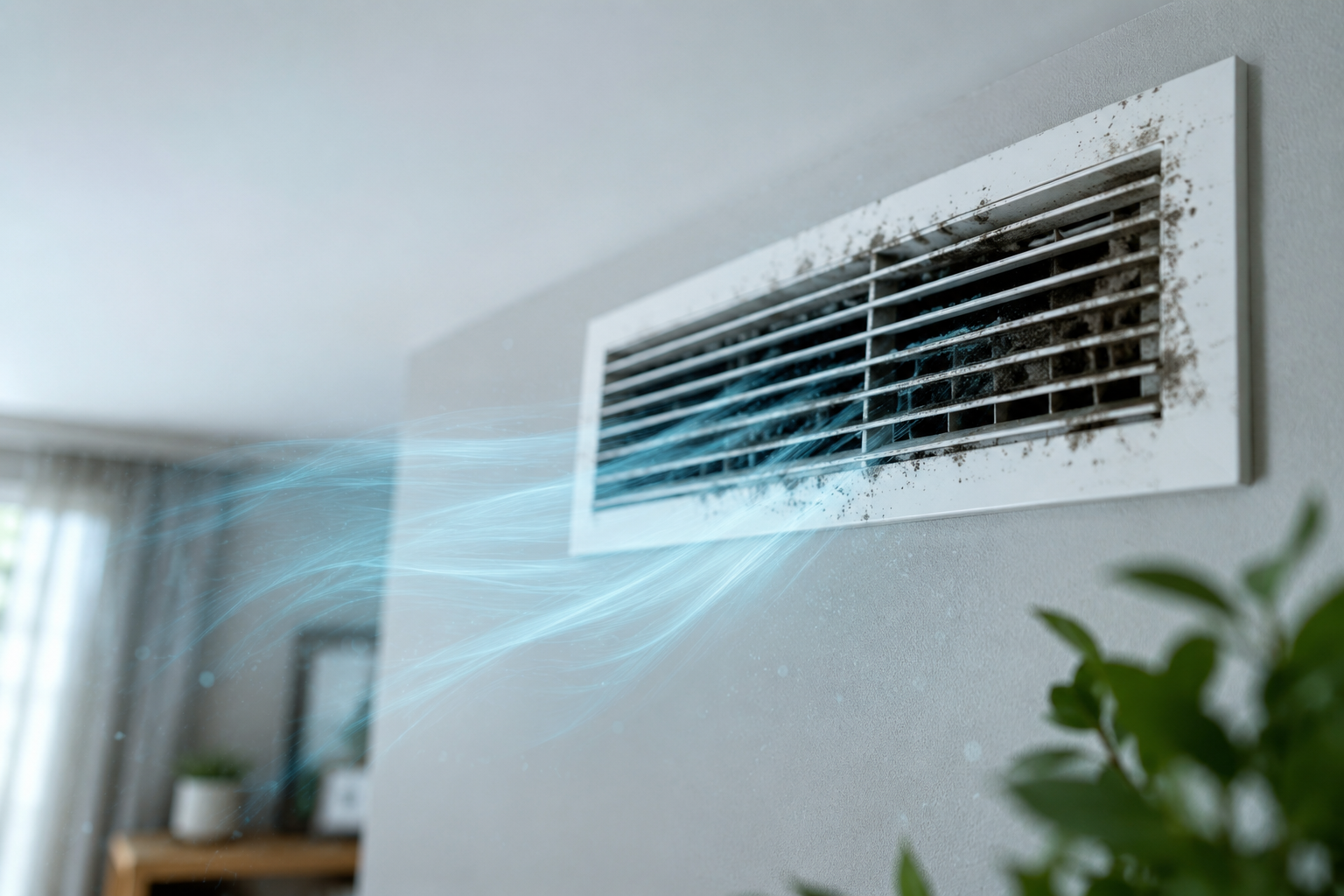
Why Your AC Smells Musty — And How to Fix It
You turn on your air conditioner expecting cool, refreshing air… but instead, you’re hit with a musty, damp, mildew-like smell.
If this sounds familiar, you’re not alone.
One of the most common complaints homeowners have during summer is:
“Why does my AC smell bad?”
In Santa Fe, where dust, dry air, seasonal monsoons, and temperature swings all affect HVAC systems, musty odors can develop surprisingly fast. And while some smells are minor, others may point to mold in your HVAC system, dirty ductwork, or indoor air quality problems.
The good news? Most AC odor issues can be identified and fixed before they become major problems.
In this guide, we’ll explain:
- Why your AC smells musty
- Common causes of bad AC odors
- How mold develops in HVAC systems
- DIY steps you can try
- When to call an HVAC professional
- How to improve indoor air quality in your Santa Fe home
Let’s get into it.
Why Does My AC Smell Musty?
A musty air conditioner smell is usually caused by moisture and organic buildup somewhere in the HVAC system.
Even though Santa Fe has a dry climate most of the year, your air conditioner naturally creates condensation while cooling your home. If moisture combines with dust, dirt, or debris, it creates the perfect environment for:
- Mold
- Mildew
- Bacteria
- Algae growth
When the system turns on, those odors circulate throughout your home.
Is a Musty AC Smell Dangerous?
Sometimes it’s just unpleasant.
Other times, it may indicate:
- Mold growth
- Poor indoor air quality
- Excess humidity
- Drainage issues
- Airborne contaminants
For sensitive individuals, exposure can trigger:
- Allergies
- Asthma symptoms
- Headaches
- Sinus irritation
- Respiratory discomfort
If anyone in your household has breathing issues, you should address HVAC odors quickly.
1. Mold and Mildew in the HVAC System
The Most Common Cause of AC Smells Bad in Santa Fe Homes
When moisture collects inside your HVAC system, mold and mildew can begin growing on:
- Evaporator coils
- Drain pans
- Air filters
- Ductwork
- Insulation
This often creates the classic:
- Musty smell
- Dirty sock smell
- Damp basement odor
Why Mold Forms in Air Conditioners
Your AC removes heat and humidity from the air. During this process:
- Warm air passes over cold evaporator coils
- Condensation forms
- Moisture drains away through a condensate line
If drainage is blocked or airflow is poor, moisture lingers inside the unit—and mold begins growing.
Signs Mold May Be Growing in Your HVAC System
- AC smells musty when it starts
- Odor gets stronger after rain or monsoon weather
- Allergy symptoms worsen indoors
- Visible mold near vents
- Increased dust accumulation
- Persistent humidity problems
2. Dirty Evaporator Coils
Your evaporator coil is constantly exposed to:
- Dust
- Pet dander
- Pollen
- Dirt particles
Over time, grime combines with condensation and creates odor-producing buildup.
Symptoms of Dirty Coils
- Musty or sour smell
- Weak airflow
- Reduced cooling performance
- Frozen coils
- Higher energy bills
Professional coil cleaning often solves this problem quickly.
3. Clogged Condensate Drain Line
Your AC system continuously removes moisture from the air.
That moisture drains through a condensate line. But if the line clogs with:
- Dirt
- Algae
- Sludge
- Mineral buildup
Water backs up into the system.
Standing water creates a breeding ground for:
- Mold
- Mildew
- Bacteria
Signs of a Drain Line Problem
- Water around indoor unit
- AC smells damp or swampy
- AC shuts off unexpectedly
- Visible mold near unit
4. Dirty Air Filters
One of the easiest causes of HVAC odor problems is a dirty filter.
When filters clog:
- Airflow decreases
- Dust accumulates
- Moisture gets trapped
- Mold spores circulate
In Santa Fe’s dusty environment, filters often need replacement more frequently than homeowners realize.
How Often Should Filters Be Changed?
General guideline:
- Every 1–2 months in summer
- More often if you:
- Have pets
- Have allergies
- Live near dust or construction
- Use your AC heavily
5. Mold or Debris in Ductwork
If your air ducts contain:
- Dust
- Rodent debris
- Moisture
- Mold spores
…your entire HVAC system can smell bad.
This is especially common in:
- Older homes
- Homes with past water damage
- Systems with poor sealing
Signs You May Need Duct Cleaning
- Musty smell throughout home
- Excess dust
- Uneven airflow
- Allergy symptoms indoors
- Odors strongest at vents
Professional duct cleaning can dramatically improve indoor air quality.
6. Dead Animal or Pest Issues
Unfortunately, rodents or pests sometimes enter duct systems or crawlspaces.
If an animal dies inside the system, the smell becomes:
- Extremely strong
- Rotting or sour
- Worse when AC runs
This requires immediate professional cleaning and sanitation.
7. Electrical or Burning Smells
Not all bad smells are mold-related.
If your AC smells:
- Burnt
- Metallic
- Like melting plastic
Turn the system off immediately.
Possible causes:
- Overheated motor
- Wiring problems
- Electrical short
- Blower motor failure
These situations require immediate HVAC service.
Why AC Odors Get Worse During Monsoon Season
Santa Fe’s summer monsoon season temporarily raises humidity levels.
This creates:
- More moisture inside HVAC systems
- Faster mold growth
- Increased condensation
- Reduced evaporation
That’s why many homeowners notice musty AC smells suddenly appear during July and August.
DIY Steps to Fix Musty AC Smells
Some odor issues are minor and can be improved with simple maintenance.
✅ Replace the Air Filter
Always start here.
A fresh filter improves:
- Airflow
- Odor control
- Indoor air quality
- HVAC efficiency
✅ Clean Around Vents
Vacuum dust around:
- Supply vents
- Return vents
- Registers
This helps reduce odor circulation.
✅ Flush the Condensate Line
Some homeowners can carefully flush the drain line with vinegar to remove algae buildup.
✅ Run the Fan Setting
Running the fan occasionally helps dry out moisture inside the system.
When You Should Call an HVAC Professional
You should schedule HVAC service if:
- The smell keeps returning
- Odor is strong or widespread
- You suspect mold
- Cooling performance drops
- Water leaks are visible
- Allergies worsen indoors
Professional inspection identifies the real source quickly.
How Professional HVAC Cleaning Helps
At Salazar Heating, Cooling & Plumbing, we inspect:
- Evaporator coils
- Drain pans
- Condensate lines
- Ductwork
- Air filters
- Blower assemblies
We can:
- Remove buildup
- Clean coils
- Eliminate mold sources
- Improve airflow
- Restore indoor air quality
Air Purification Systems for Santa Fe Homes
If odors or allergies are recurring, adding air purification can help dramatically.
Popular Indoor Air Quality Solutions
UV Air Purifiers
Kill mold, bacteria, and airborne contaminants.
Whole-Home Air Filtration
Removes dust, pollen, and particles.
Dehumidification Solutions
Help control moisture in problem areas.
Preventing Mold in HVAC Systems
The best solution is prevention.
HVAC Maintenance Tips
- Change filters regularly
- Schedule annual AC tune-ups
- Keep drain lines clean
- Install UV purification
- Clean ducts when needed
- Address leaks immediately
Routine maintenance is far cheaper than mold remediation.
Why Regular HVAC Maintenance Matters in Santa Fe
Santa Fe homes face unique HVAC challenges:
- Dust
- Hard water
- Monsoon humidity
- Large temperature swings
Without maintenance, systems accumulate buildup much faster.
Annual tune-ups help:
- Prevent odors
- Improve efficiency
- Extend equipment life
- Reduce repair costs
Why Choose Salazar Heating, Cooling & Plumbing?
At Salazar Heating, Cooling & Plumbing, we help homeowners solve:
- Musty AC smells
- Mold in HVAC systems
- Indoor air quality problems
- Dirty ductwork
- Airflow issues
We offer:
- AC tune-ups
- Duct cleaning
- Indoor air quality upgrades
- Air purification systems
- HVAC inspections and repairs
Our team understands Santa Fe’s climate and how to keep your HVAC system running clean and efficiently year-round.
Call Salazar Heating, Cooling & Plumbing Today
If your AC smells musty, don’t ignore it.
A bad smell could mean:
- Mold growth
- Drainage problems
- Dirty ductwork
- Indoor air quality issues
Let our team identify the cause and fix it properly.
📞 Call Salazar Heating, Cooling & Plumbing at (505) 820-2007 today to schedule HVAC service.
Serving Santa Fe, Albuquerque, and surrounding New Mexico communities with trusted HVAC solutions and indoor air quality services.